DHL Vision Suite
The DHL Vision Suite is part of the DHL Innovation Center and functions as an immersive high-tech showroom that makes the future of global logistics tangible. It presents long-term scenarios—often with a horizon of 2050—and translates emerging technologies such as artificial intelligence, robotics, IoT, and autonomous systems into spatial, experiential narratives for customers and partners.
The goal of the Vision Suite is not speculation, but dialogue: turning visionary ideas into shared reference points for strategic discussions about future supply chains.
Challenge
The core challenge was to communicate highly complex systems in a physical, immersive environment where visitors do not interact with conventional screens or follow linear user journeys. Information had to be understood within seconds, without instruction or explanation, while remaining credible, precise, and relevant for decision-makers. At the same time, the UI needed to coexist with cinematic, AI-generated content—enhancing it without overpowering it, and structuring vision without breaking immersion.
Concept & Role
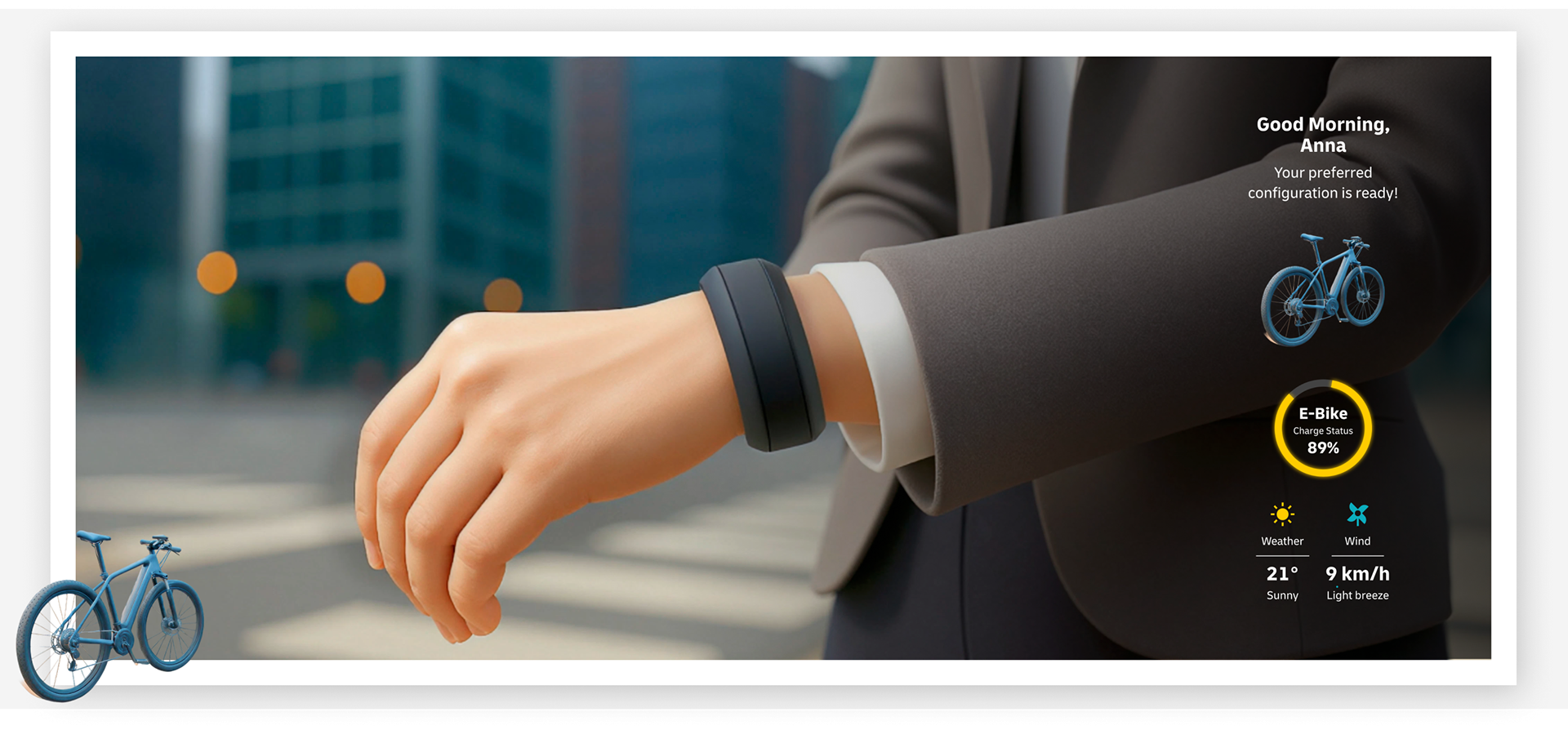
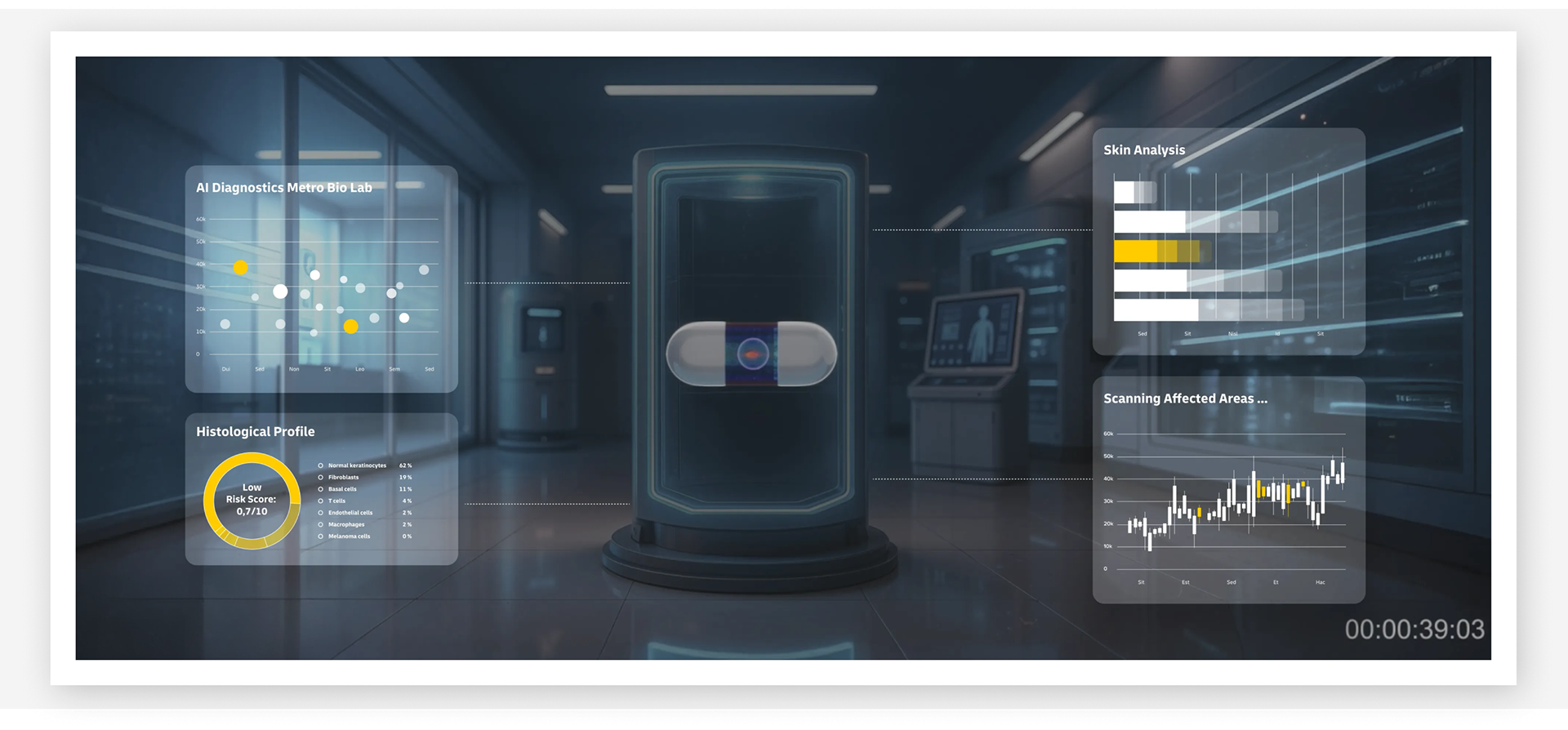
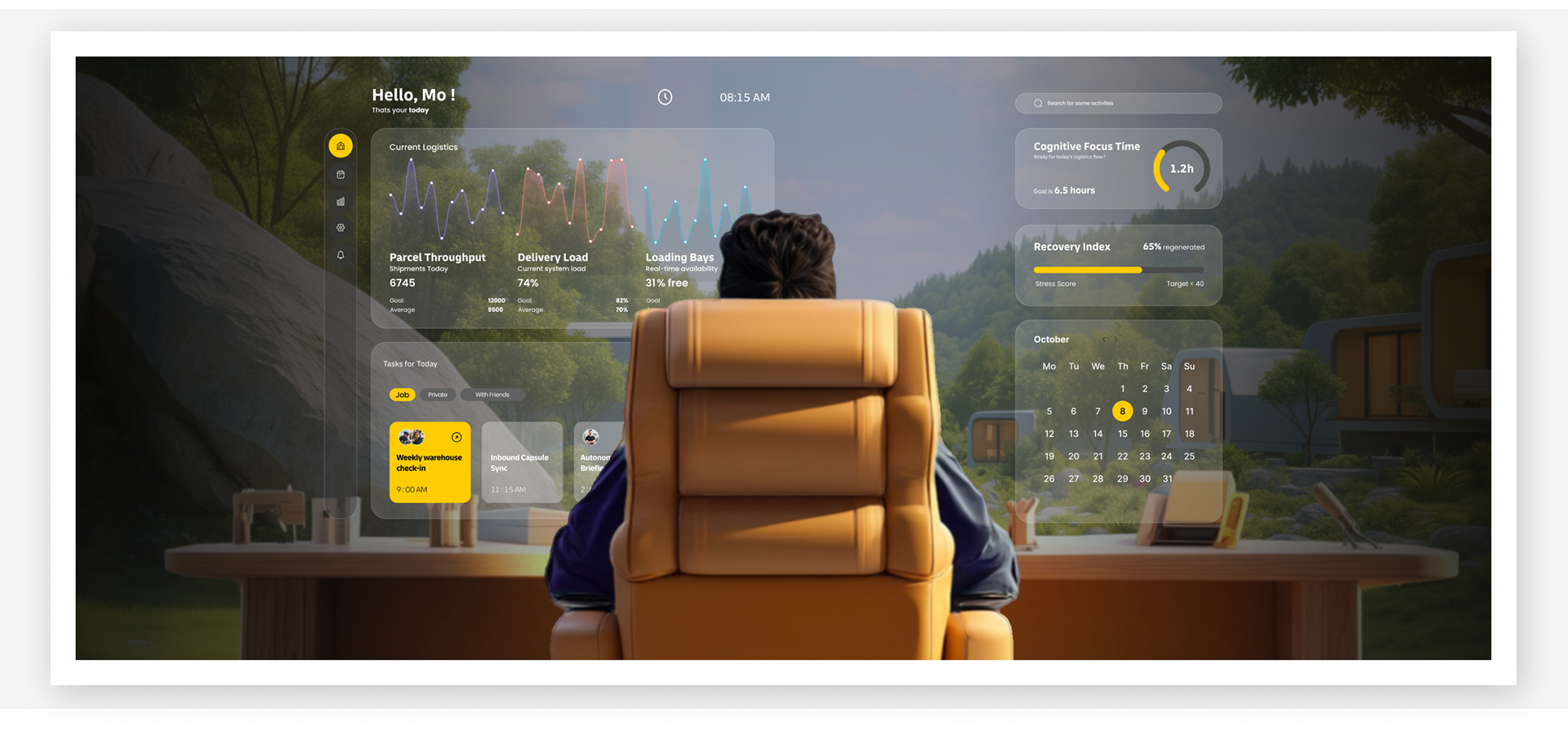
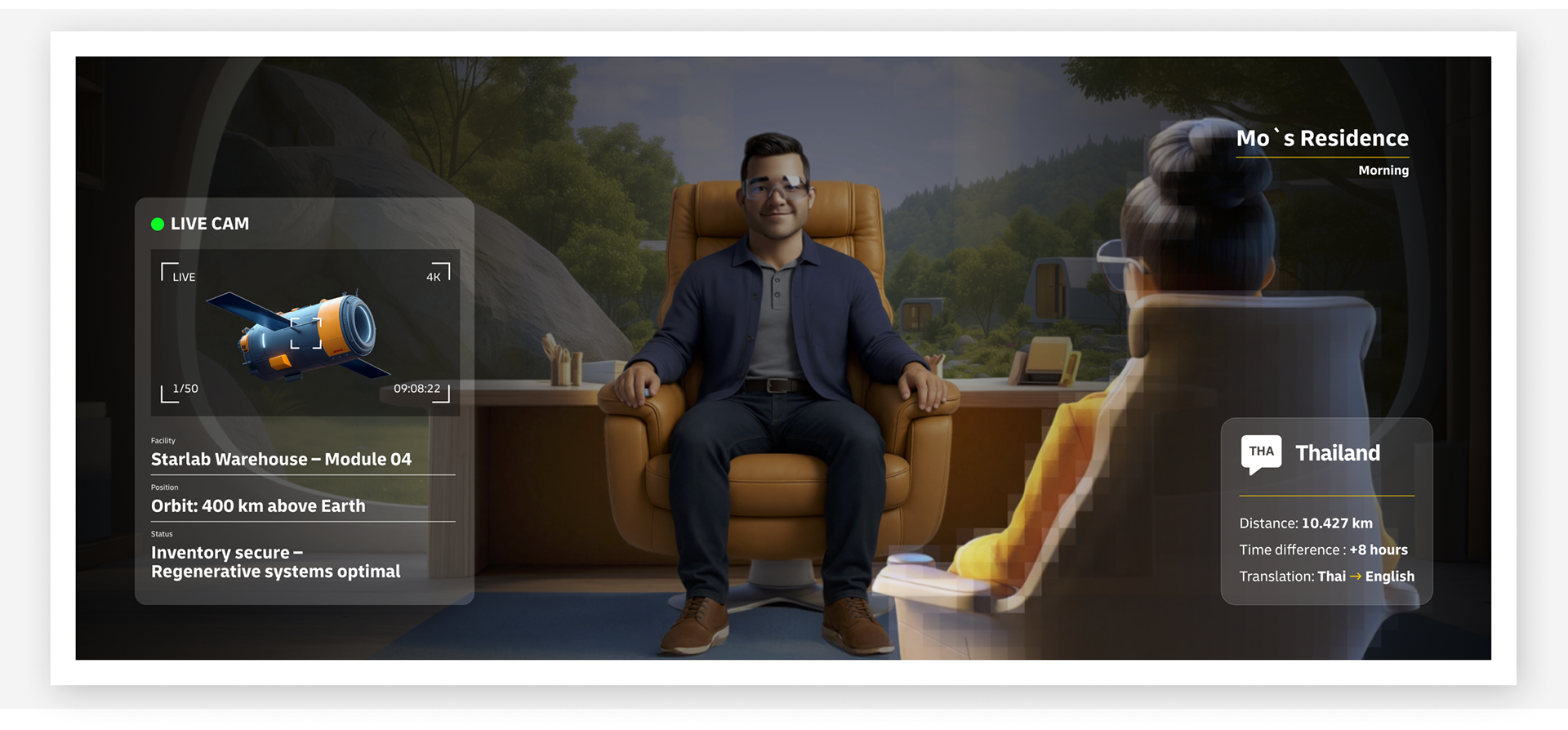
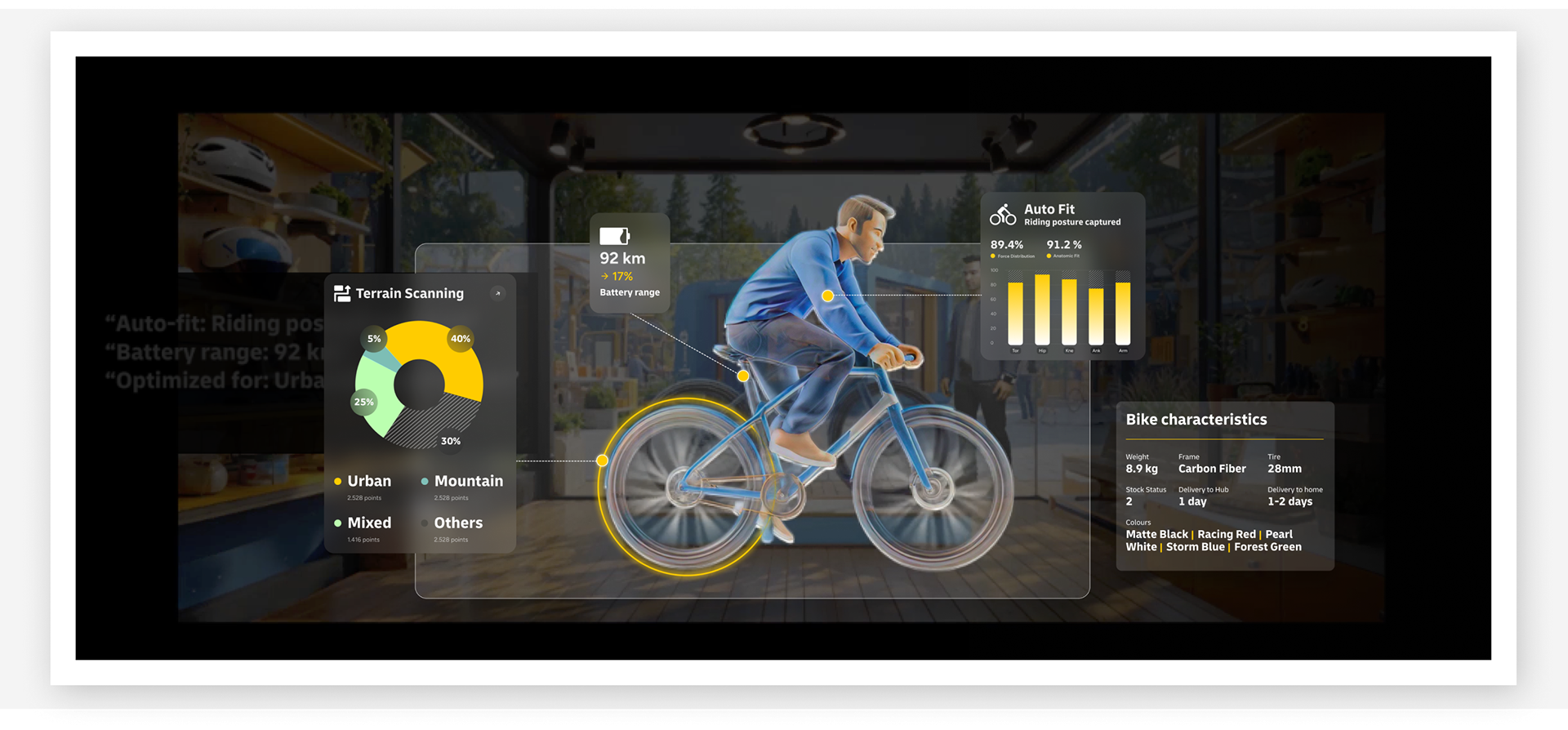
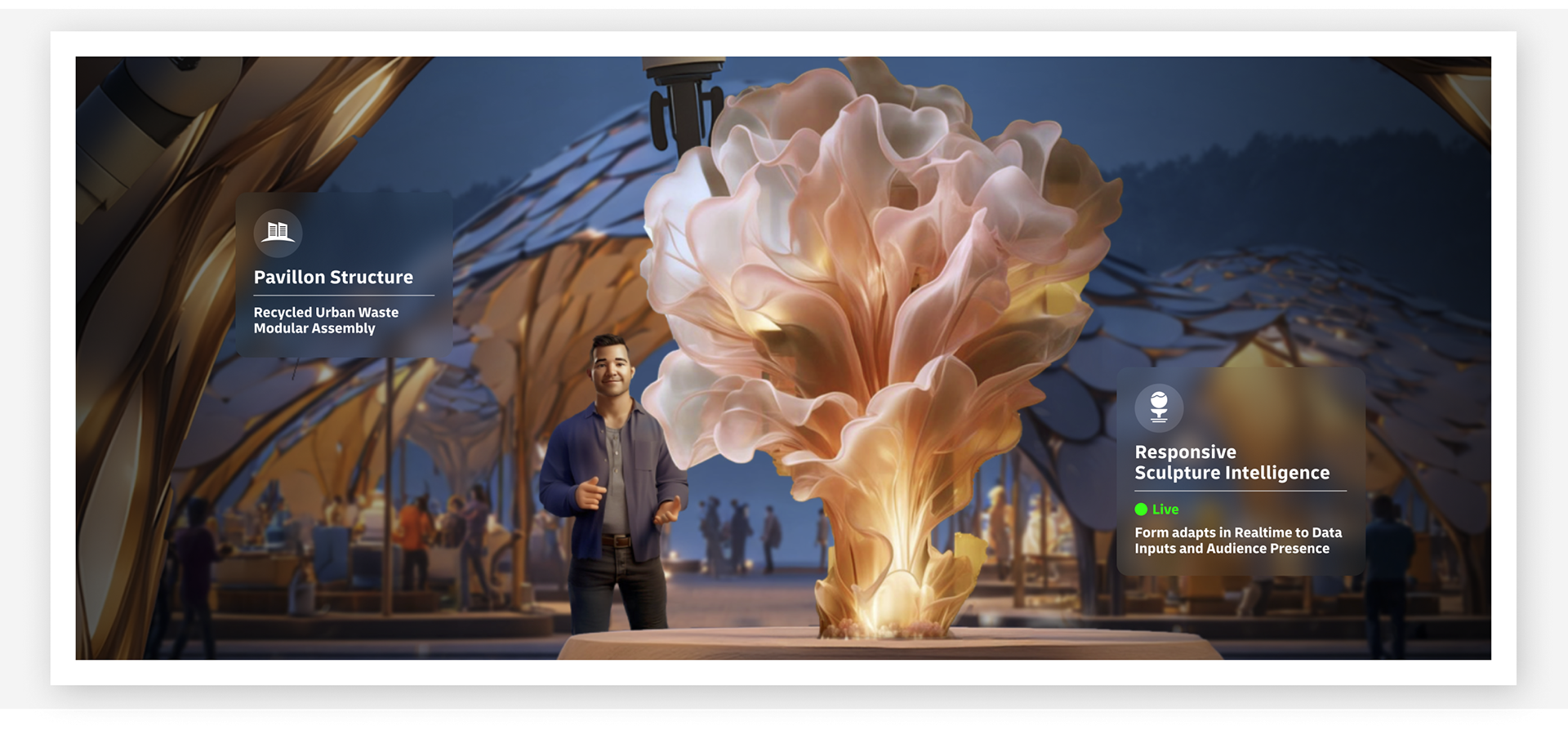
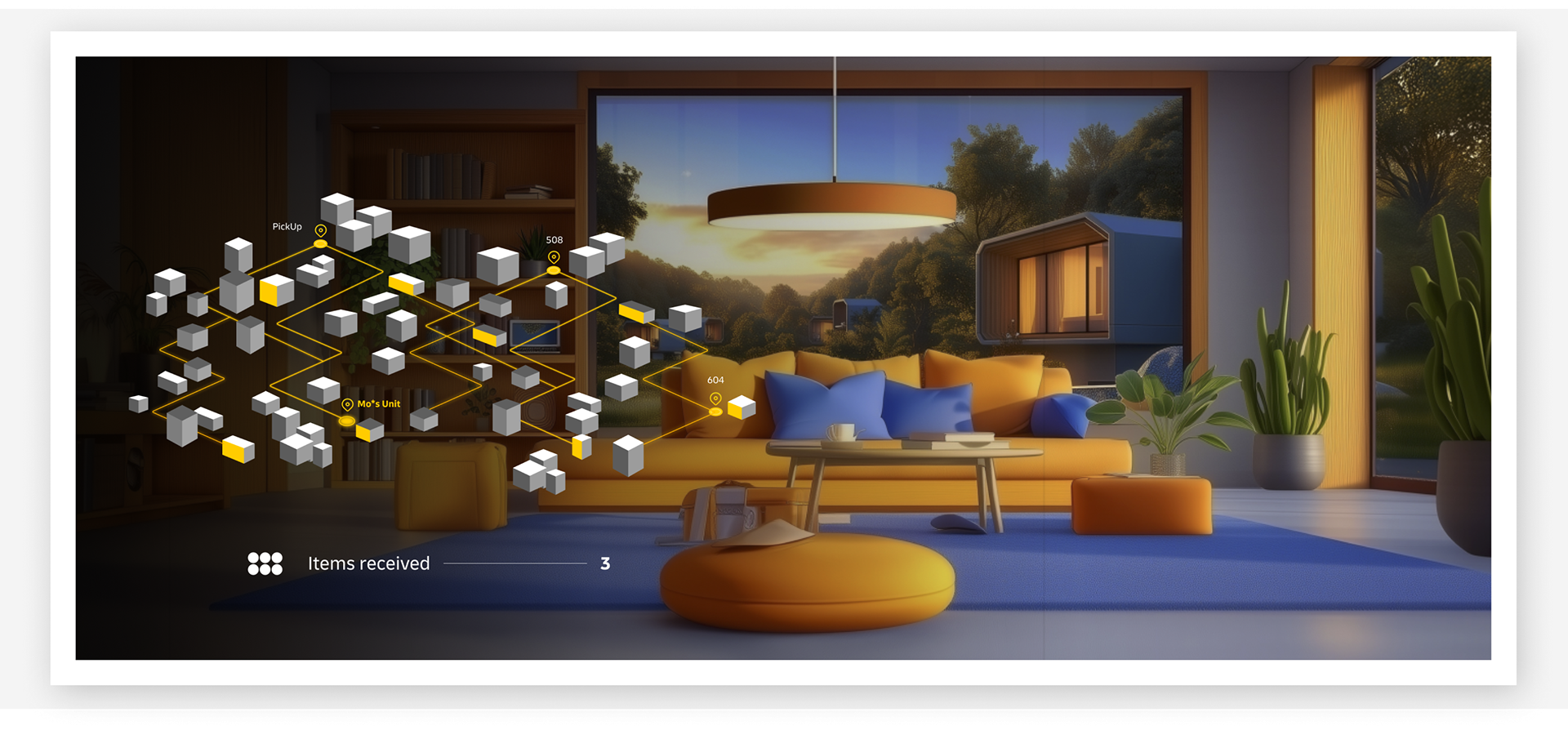
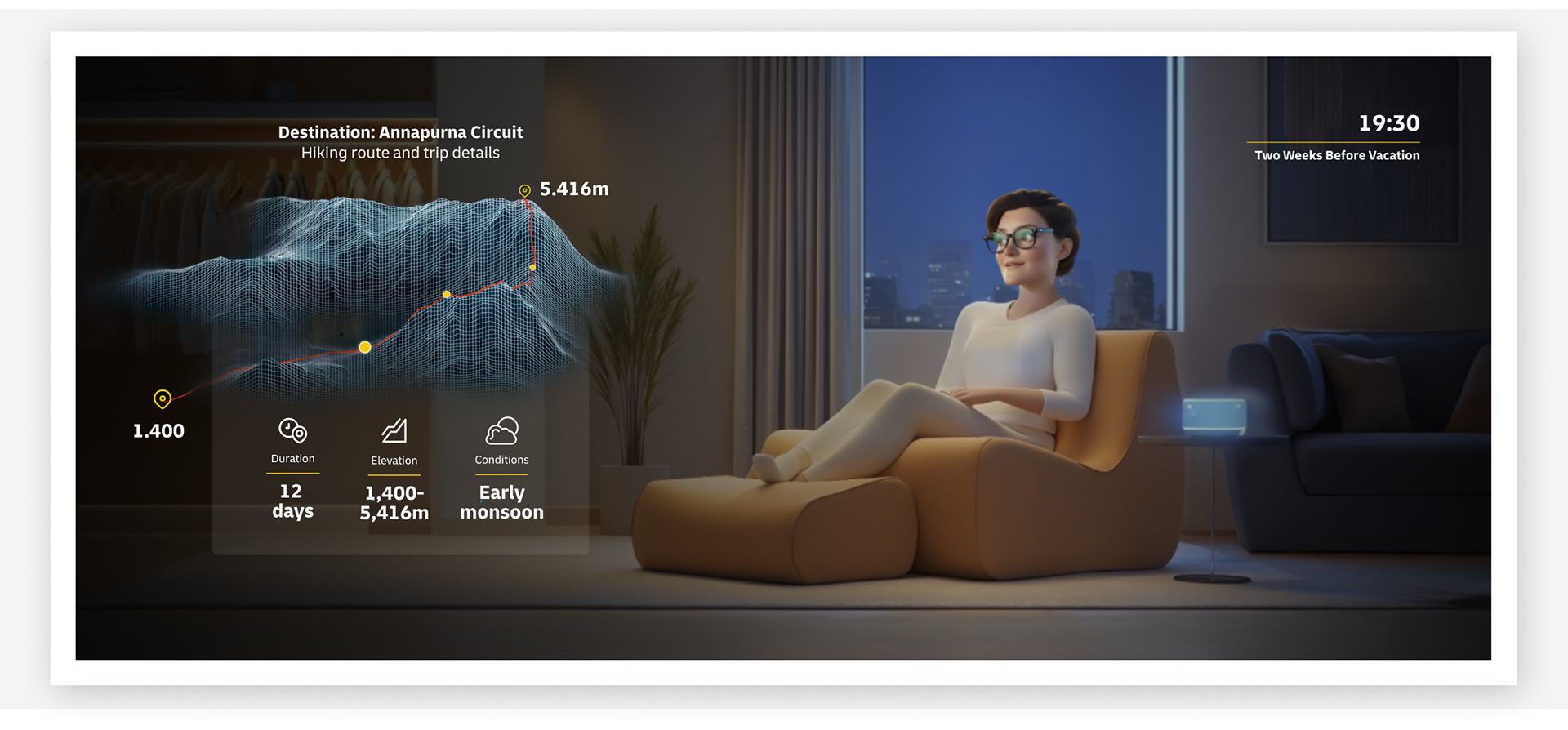
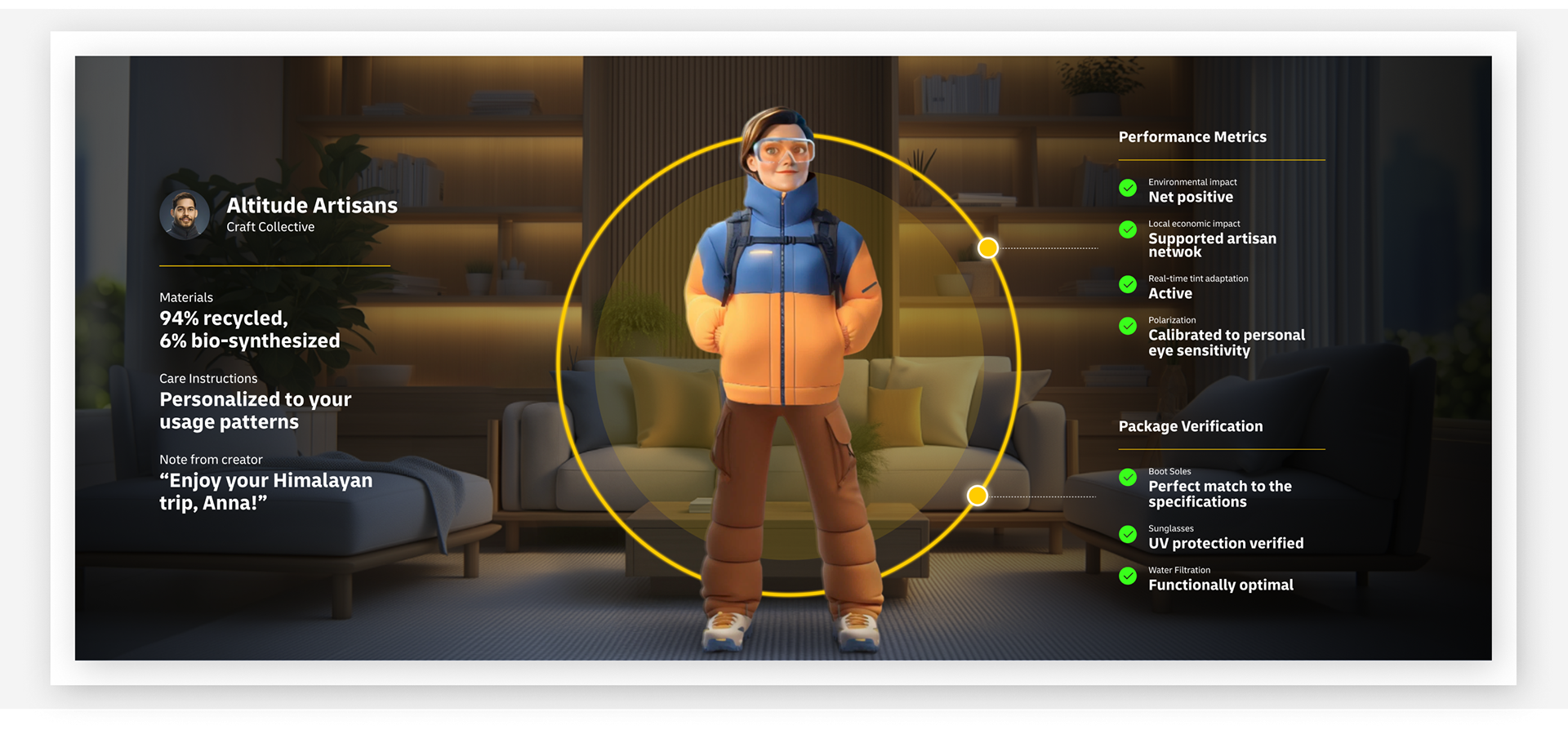
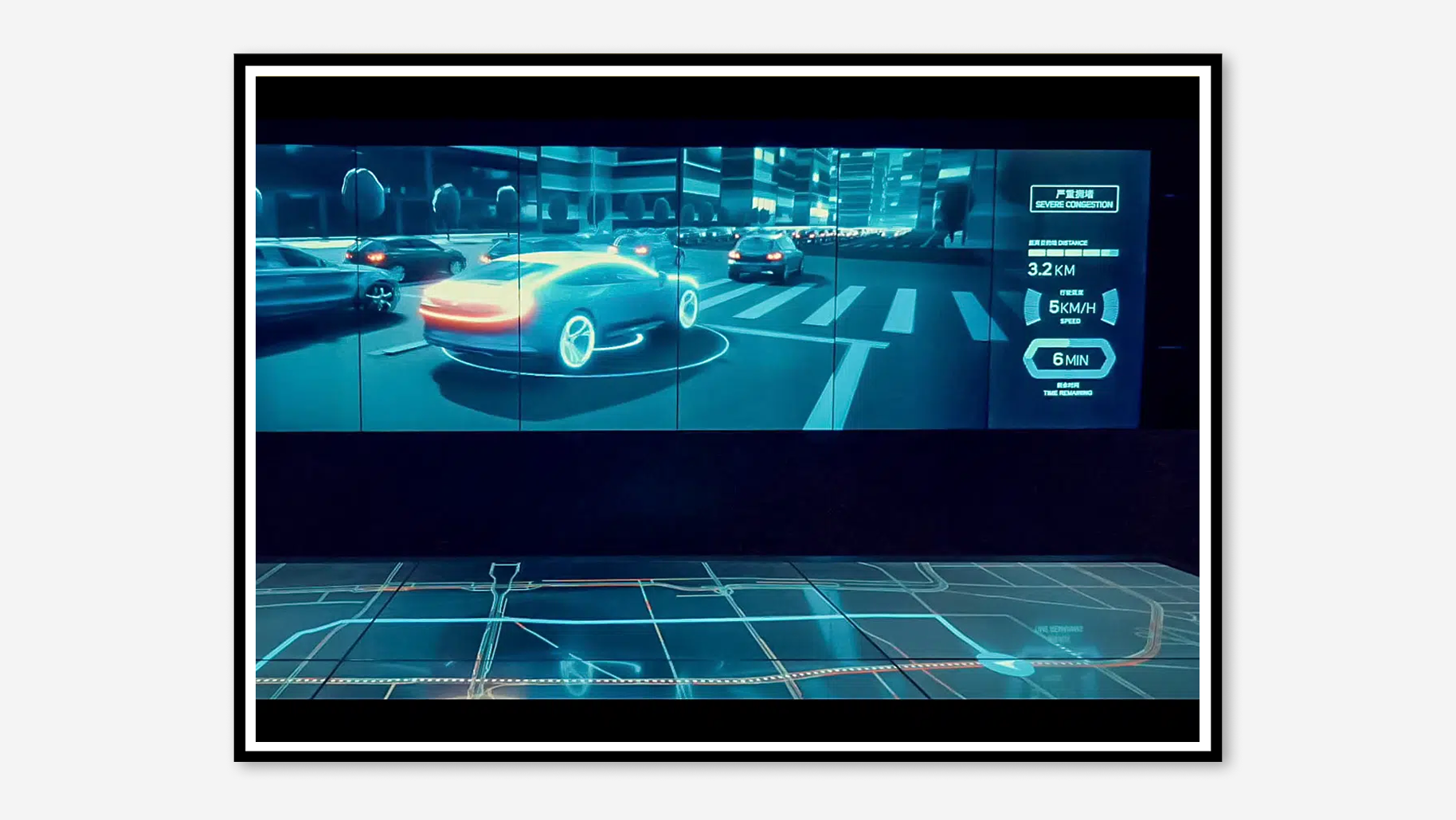
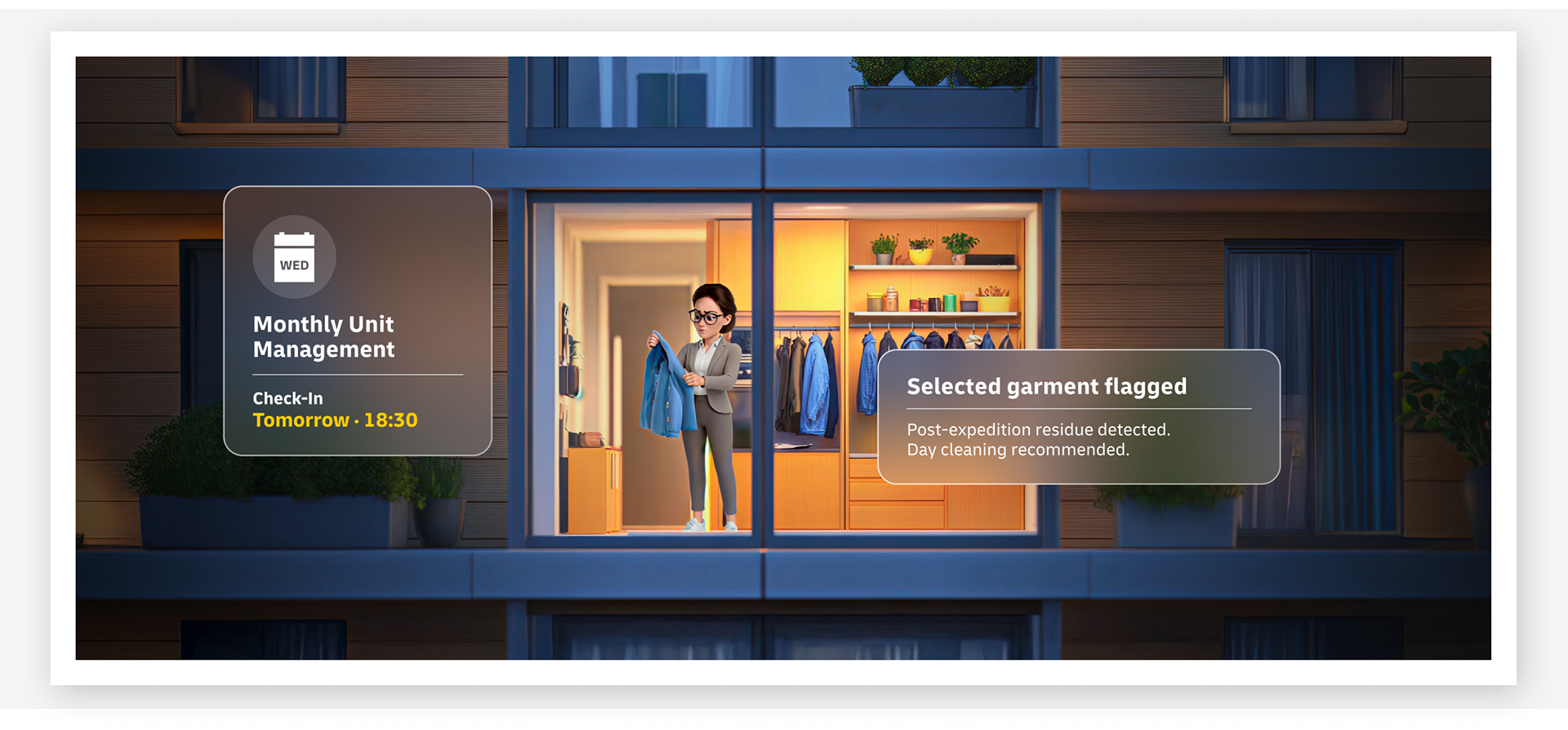
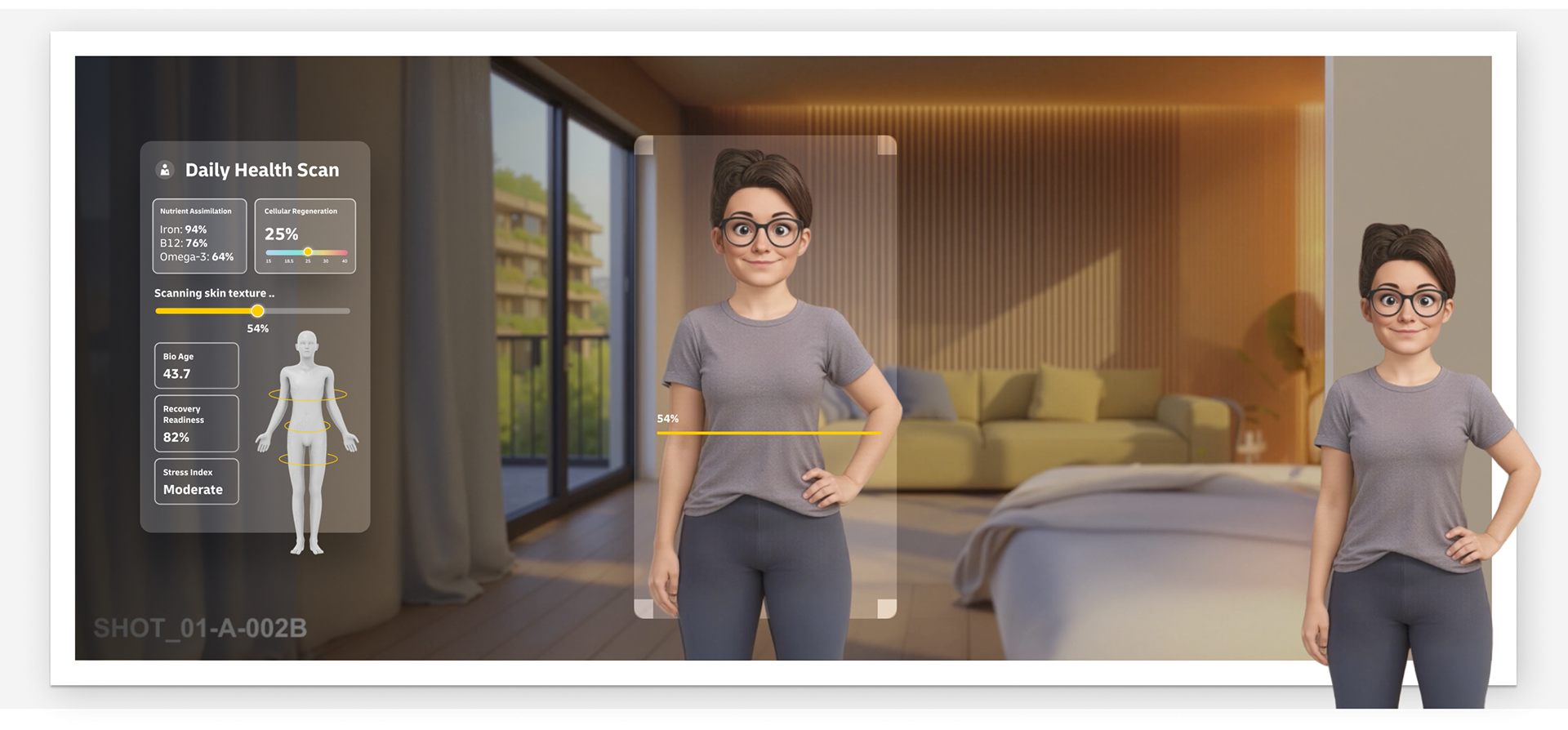
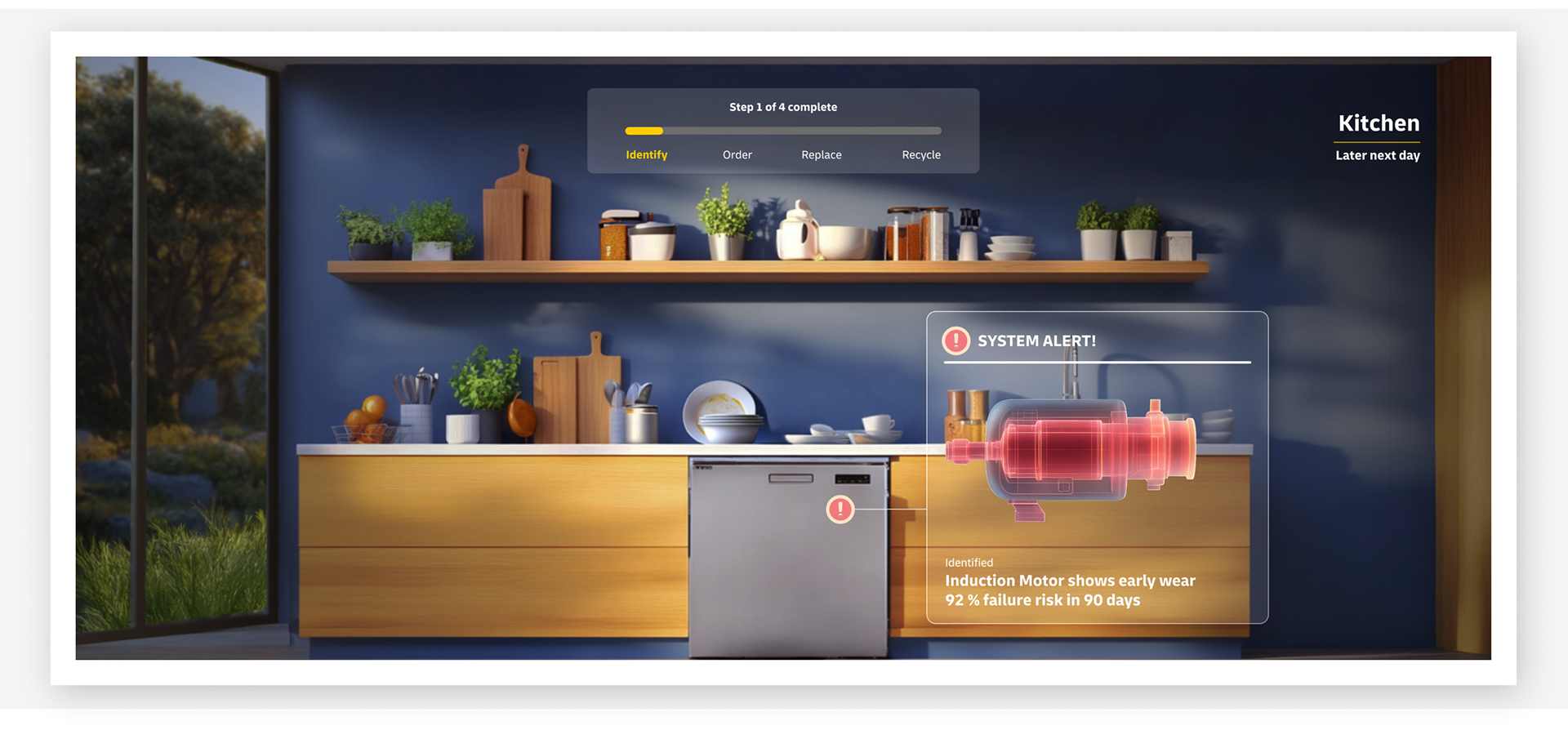
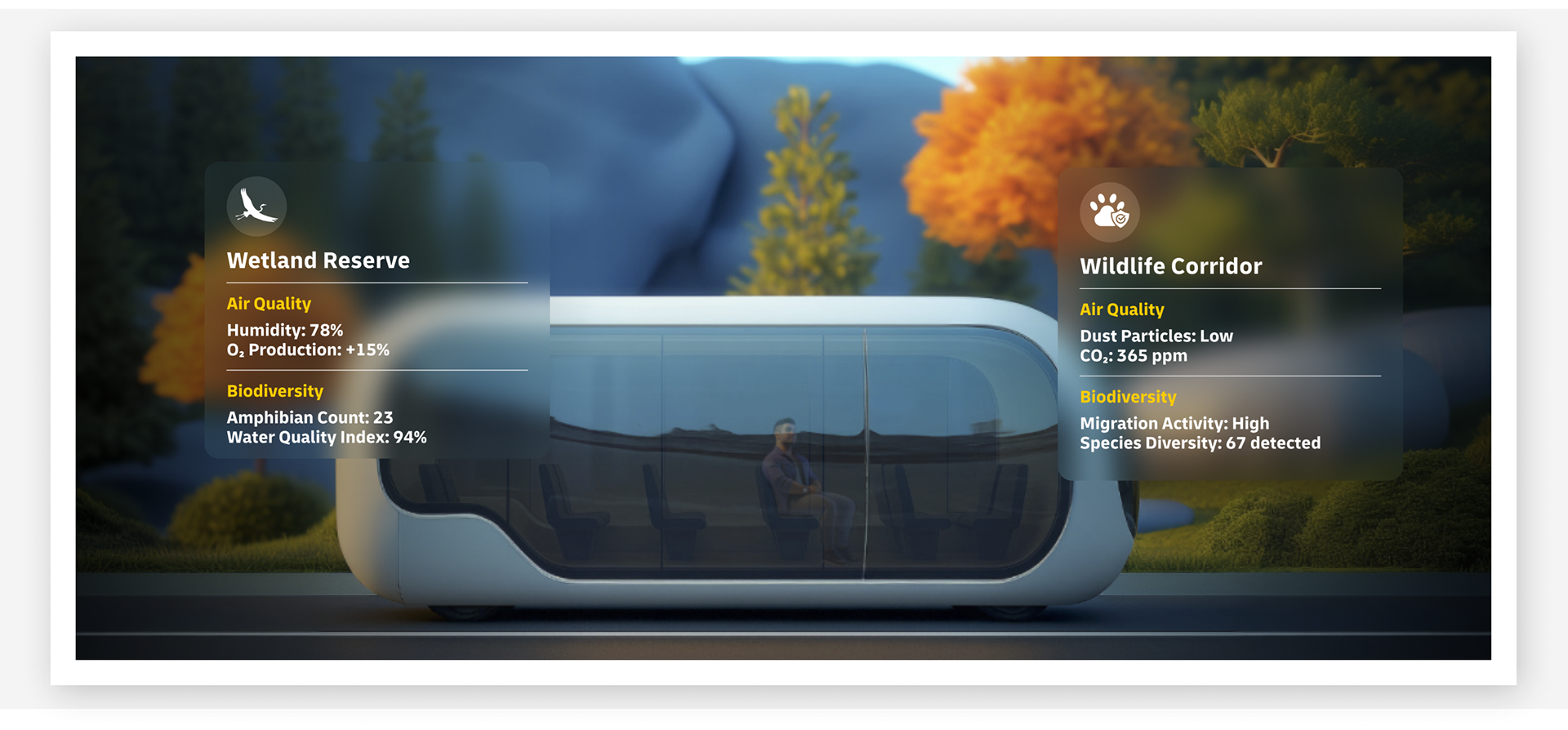
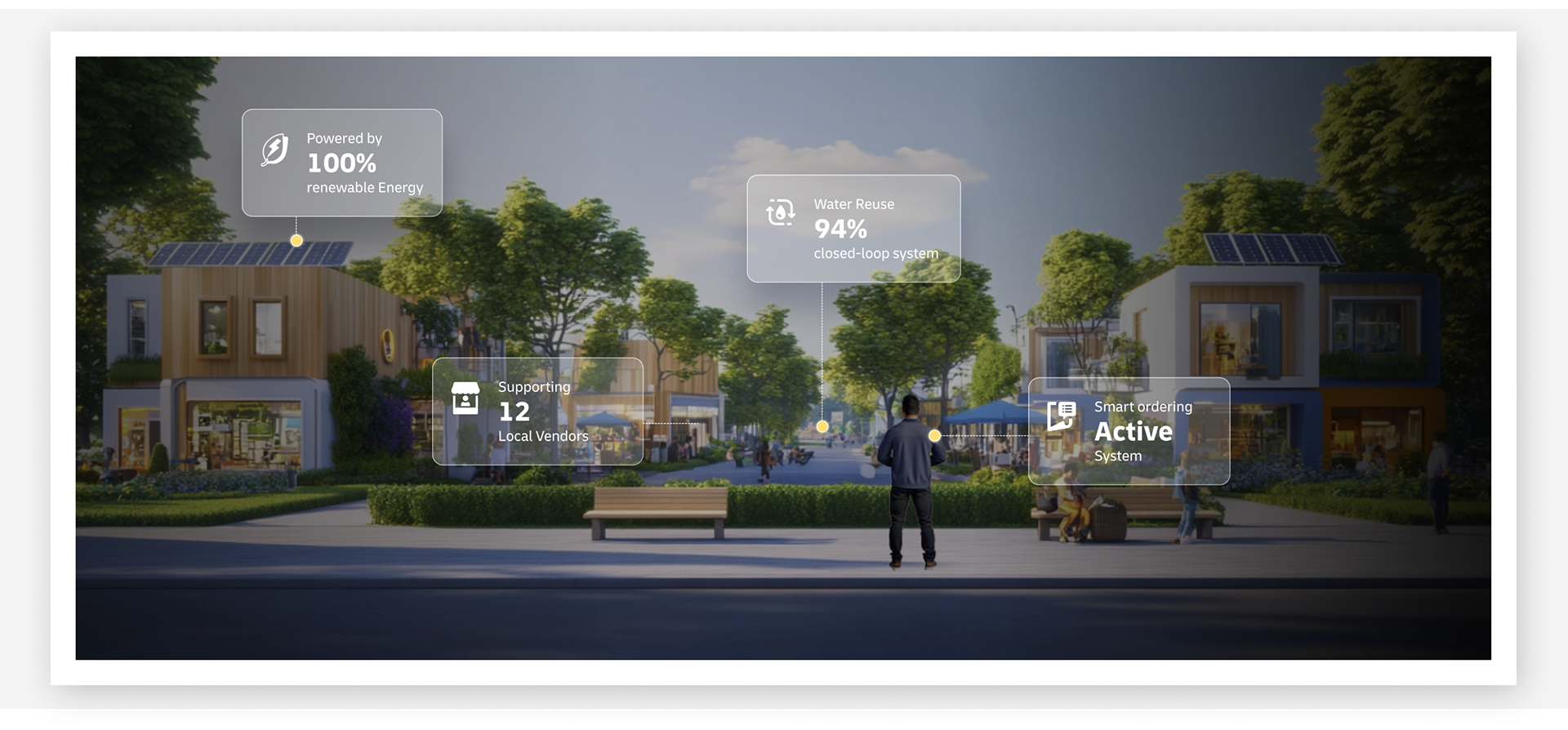
I designed the complete user interface for the DHL Vision Suite as a freelance UX/UI designer. The cinematic base films were generated using Kling AI. On top of these films, I created a dedicated holographic UI layer that interprets, contextualizes, and structures the visual narratives. The UI acts as an interpretive system rather than a decorative overlay. It introduces hierarchy, logic, and meaning—turning speculative imagery into readable states, metrics, and cause-effect relationships.
Design & System
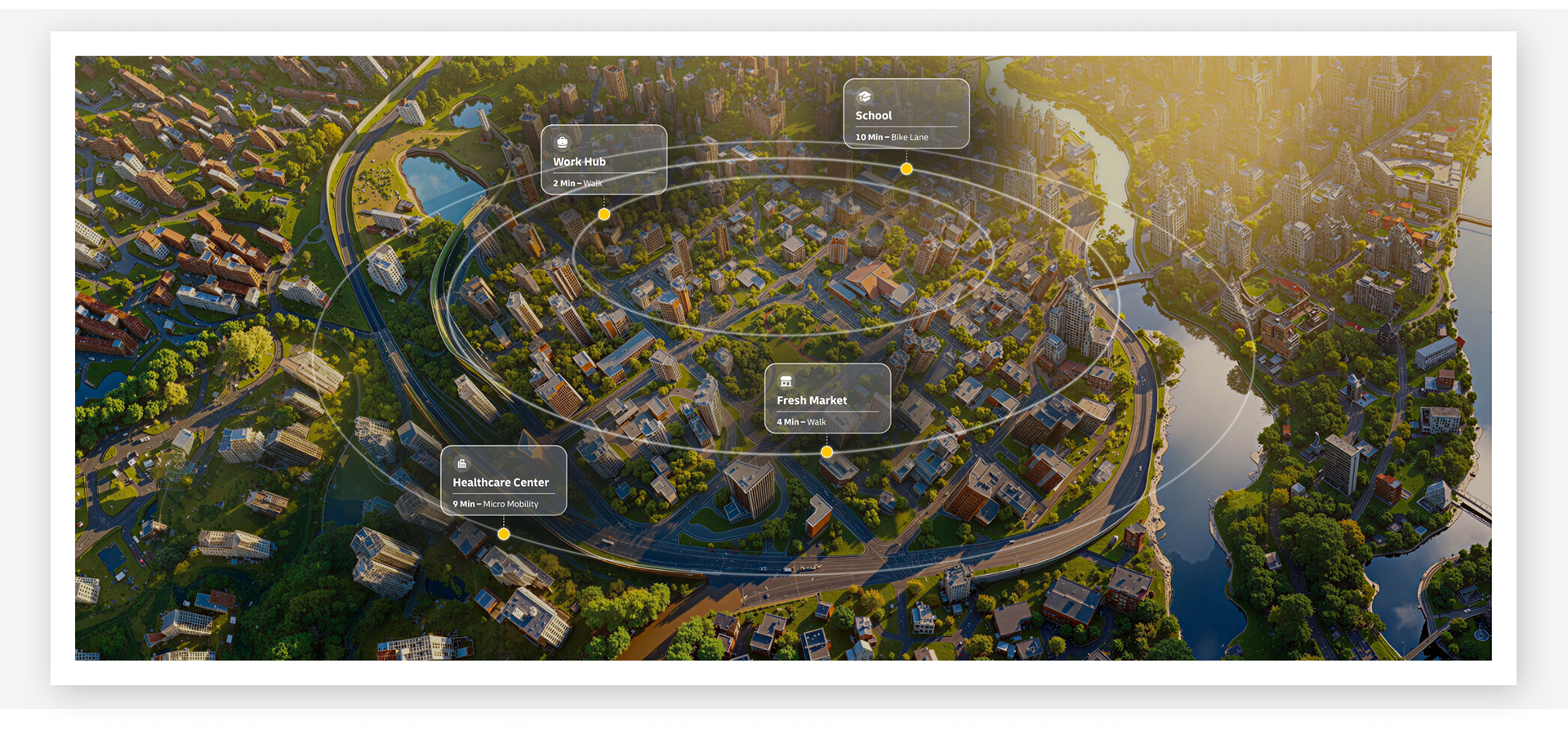
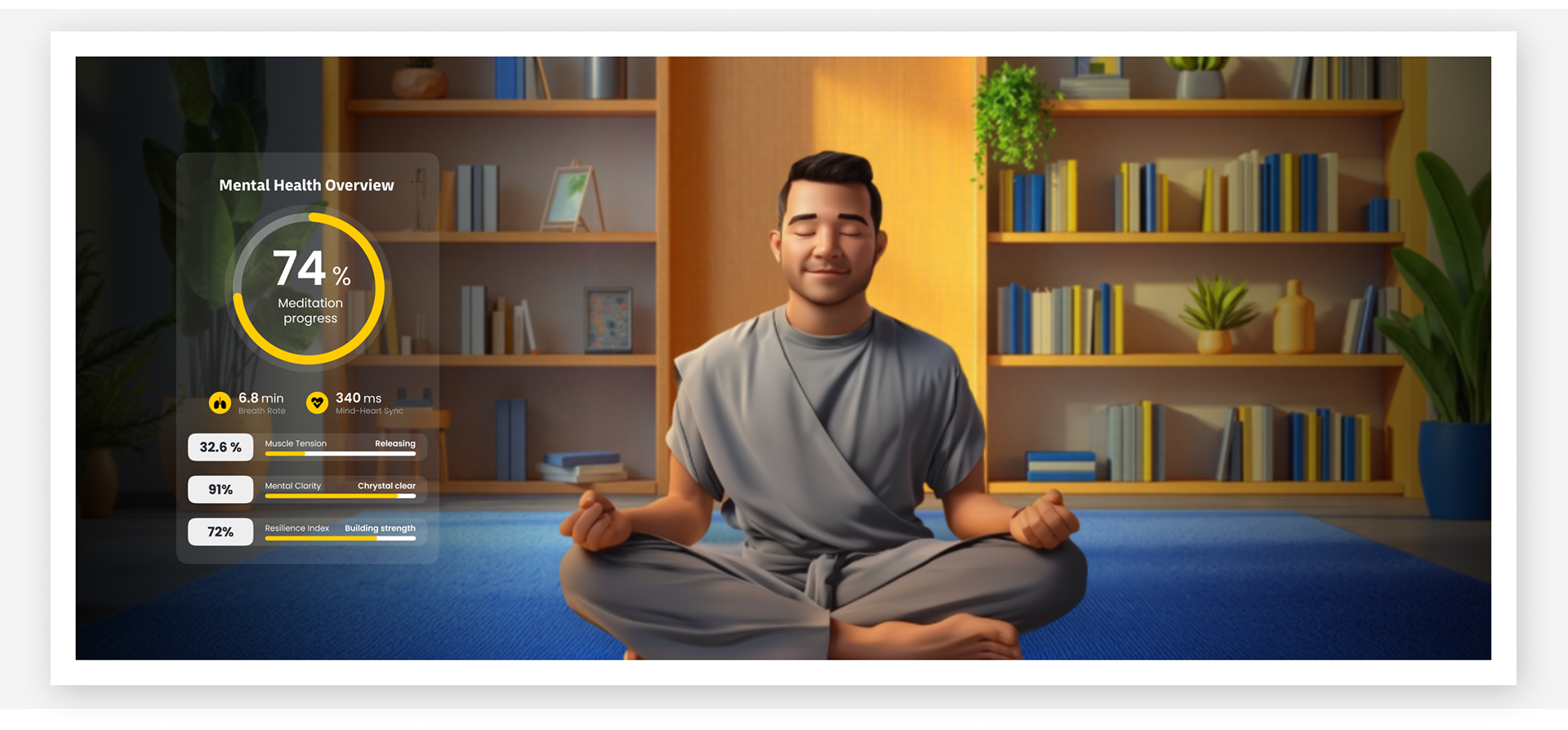
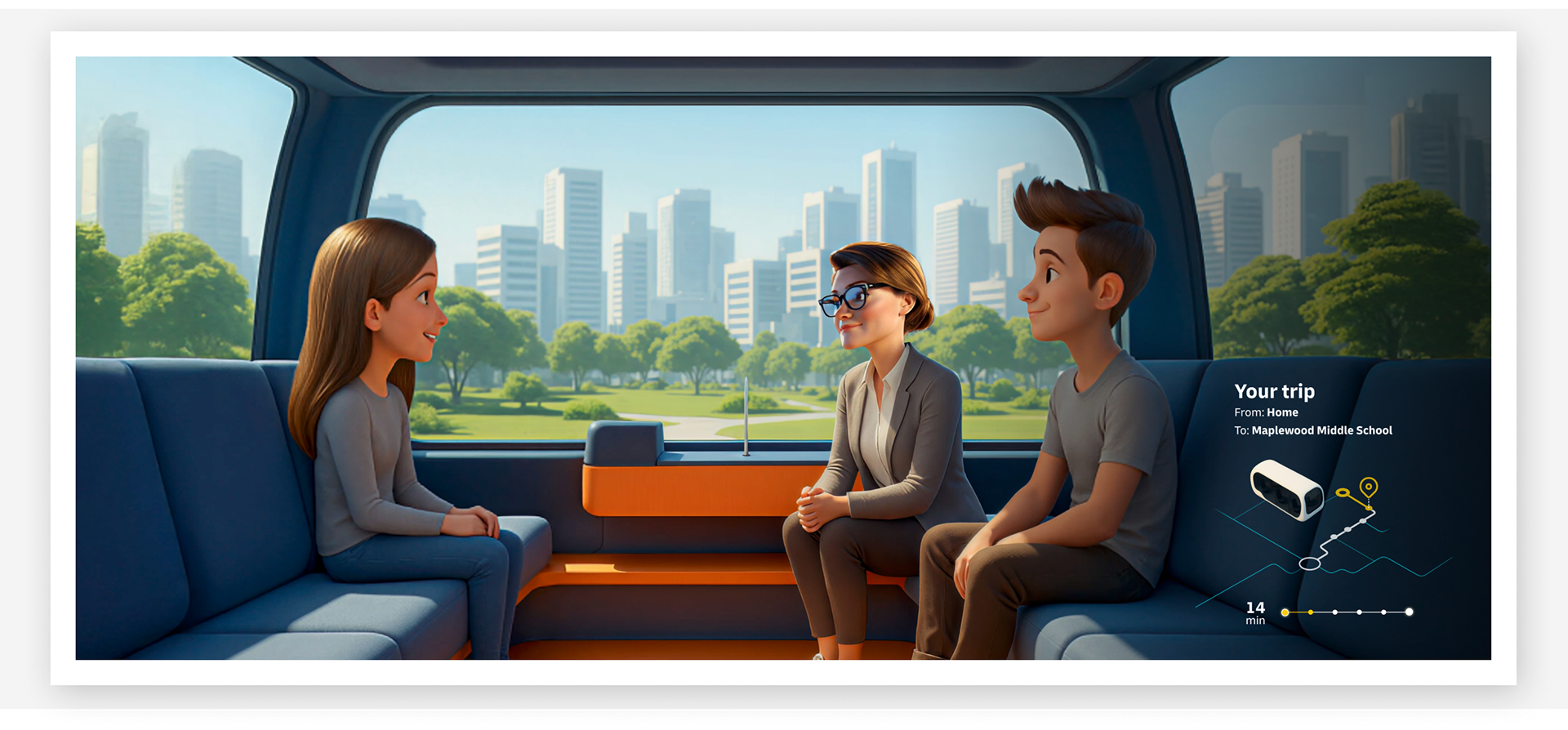
The interface system is modular and data-driven, designed to scale across a wide range of future scenarios—from personal inventory systems and predictive maintenance to health analytics, environmental monitoring, urban mobility, and global logistics networks.
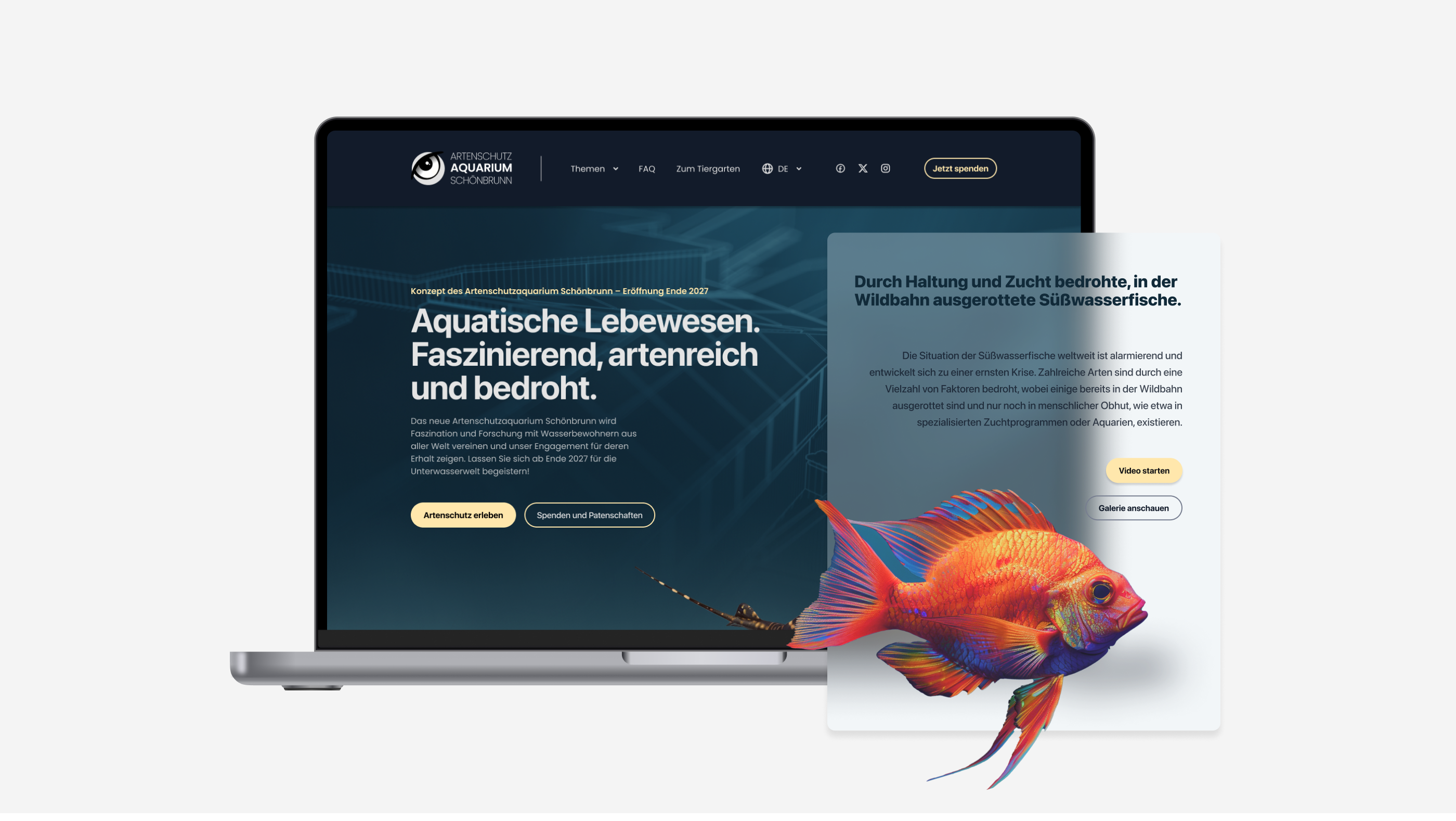
Transparent, glass-like UI layers create clear spatial separation from the underlying films while preserving depth and immersion. Reduced data visualizations, progress indicators, and status signals allow visitors to grasp complex processes instantly. A consistent visual language ensures orientation and trust across all scenarios.
A deliberate design choice was to avoid speculative sci-fi aesthetics and instead establish a future-ready visual language grounded in clarity, realism, and precision.
Outcome
The resulting UI transforms the DHL Vision Suite into a shared visual framework for strategic dialogue. It enables visitors to understand not only what future technologies may enable, but how they affect efficiency, sustainability, resilience, and human interaction across the supply chain.
By layering a coherent holographic interface system over AI-generated vision films, the Vision Suite connects long-term imagination with operational relevance—turning vision into something that can be discussed, evaluated, and acted upon.